
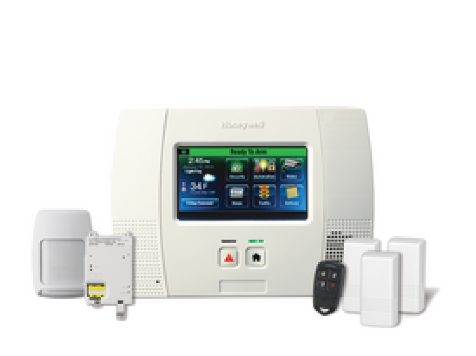
Home security can be an overwhelming thing to shop for. Every national brand sells the same promise in the same advertisement, and most of them want you to open a box, stick sensors to your door frames, and hope the app is configured correctly. Kincaid Alarm has taken a different approach out of the same Lake Wales storefront since 1973: a technician walks your house, works out where an intruder would actually come in, and designs a system around that.
We are proud to install and service all Ademco and Honeywell security products. Whether your home needs a retrofit to replace some outdated equipment or an entirely new system, we are there to make your property and family secure. Take the guess work out of the equation and call us for a free home security assessment.
Serving Polk County: Lake Wales, Winter Haven, Bartow, Haines City, Lakeland, Dundee, Frostproof, Auburndale, Polk City, Davenport, Fort Meade, Lake Alfred, and the surrounding Central Florida communities. Call (863) 223-8324 for a free assessment.
Signs your home needs a system, or a better one
None of these mean an emergency. All of them mean a conversation is worth having before something happens rather than after.
- You have no alarm at all, and the house sits back from the road or behind trees where a break-in would not be seen
- Your panel is old enough that it still dials out over a landline you no longer keep
- The system came with the house and nobody has ever tested it or knows the master code
- You are paying a monthly bill to a company that has never sent a technician to your door
- Doors and windows added during a remodel were never covered by the original sensors
- You have a detached garage, workshop, barn or dock house with nothing on it
- The house sits empty for months while you are north for the summer
- You want to see and control the system from your phone and the current panel cannot do it
What we usually find on a first visit
Most Polk County homes we assess fall into one of these four situations. Each one has a different and usually inexpensive answer.
No system, or a decorative one
- Yard signs and window stickers left by a previous owner with no equipment behind them
- A panel on the wall that was disconnected when the previous monitoring contract lapsed
- Motion detectors aimed at furniture rather than at the path from an entry point
- Only the front door covered, with sliders and rear windows left open
Equipment that has aged out
- Panels that communicate only over a copper phone line that has since been dropped
- Sensors with dead batteries that have been beeping long enough that everyone tunes them out
- Keypads with worn digits that quietly reveal the code
- Sirens installed where a closed bedroom door will muffle them
A system nobody uses
- A false alarm history that trained the household to stop arming it
- No stay mode configured, so the system is useless while anyone is home
- Pets that trigger motion detectors because pet-immune units were never specified
- Codes shared so widely that nobody could say who disarmed it and when
Coverage that stops at the walls
- Detached garages, pole barns and workshops holding tools worth more than the contents of the house
- Screened pool enclosures and lanai sliders treated as interior doors
- Boat lifts, dock houses and seawall gates on the Chain of Lakes with nothing on them
- Gates and driveways with no notification when someone comes up them
Why a professionally installed system beats a box from the internet
DIY security is genuinely better than nothing. It is not the same product, and the difference shows up on the night it matters.
- A technician designs around your actual floor plan, entry points and habits rather than a generic sensor count
- Signals go to a UL Listed, FM Approved central station in Florida that dispatches police and fire, not to a phone that might be on silent
- Sensors are mounted, aimed and tested rather than taped up and hoped for
- Cellular and internet paths are set up so cutting a phone line does not take the system offline
- Someone local carries responsibility for the system working, and comes out when it does not
- Florida insurers commonly discount premiums for a centrally monitored system, which a self-monitored one may not qualify for
How we put a system in
Four steps, and the first one is free.
- 1
Free home security assessment
We walk the property with you, inside and out. We look at how the house is approached, which openings are realistic entry points, where the panel and keypads should live, what you want to be able to see from your phone, and what you are already paying elsewhere. You get a straight recommendation, including the parts you can skip.
- 2
A written design and price
You get the equipment list, the monitoring rate, and the installation cost in writing before anything is ordered. If an existing system can be reused or taken over instead of replaced, we tell you, because a takeover is usually cheaper for you than a new install.
- 3
Installation by our own technicians
We install, program and label the system, set up the communication paths, and register the account with the central station. We do not subcontract the work to whoever is available that week.
- 4
Testing and a handover you actually understand
We test every device against the central station on a live signal, set up your codes and your call list, walk the household through arming in stay and away modes, and set up the app if you are taking remote services. Then you have our local number when something needs attention.
What a Kincaid system can include
Every system is specified for the property. This is the menu we design from, not a package everybody gets.
Perimeter and interior detection
- Door and window contacts on every realistic entry point
- Glass break detectors for large fixed panes and sliders
- Pet-immune motion detectors placed on the path from an entry
- Interior partitioning so you can arm the perimeter while the household is home
- Panic and duress functions at the keypad and on a keyfob
Life safety and environment
- Monitored smoke and heat detection tied to the same central station
- Carbon monoxide detection where there is gas appliance or attached garage exposure
- Water and freeze sensors at water heaters, laundry and A/C pans
- Temperature alerts for homes left empty over the summer
Communication and control
- Cellular and internet reporting paths so the system does not rely on a phone line
- Battery backup that keeps the system live through a Florida power outage
- Wireless keyfobs, wall keypads and touchscreens
- Total Connect Remote Services for arming, disarming, alerts and video from your phone
Outside the four walls
- Detached garages, workshops, barns and sheds
- Screened lanais, pool enclosures and rear sliders
- Driveway and gate notification
- IP camera coverage integrated with the alarm
Ready to book home security systems?
Licensed, family owned, and working out of Lake Wales since 1973. Upfront pricing, and a real person on the phone.
Other Security Alarms Services
Home Security Systems Across Polk County
The same crew covers the whole service area. Pick your city for local detail, or just call us.
Home Security Systems FAQs
How much does a home security system cost?
The equipment and installation depend entirely on the house, so we price it after we have seen it, in writing, before any work starts. What we can publish is the monitoring, because that part is a rate rather than a quote: basic central station monitoring starts at $25.50 a month, and Total Connect Remote Services, which gives you app control, custom alerts and live video, starts at $5.99 a month on top. The assessment that produces the equipment number is free.
Do I have to sign a long contract?
Talk to us about the term before you assume it works like the national brands. We are a local family company and the monitoring agreement is something we go through with you line by line, in person, rather than something you click past on a website.
Will my dog set the alarm off?
Not if the system is specified correctly. We use pet-immune motion detectors and place them so a dog moving at floor level does not cross the detection pattern the way a person walking upright does. Tell us about the animals in the house at the assessment, including weight and where they sleep, and we design around them.
What happens when the alarm actually goes off?
The panel sends the signal to our central station in Florida, which is UL Listed, FM Approved and has been in business since 1978. An operator works your call list and dispatches the Polk County Sheriff or your city police as the situation and your instructions require. If you have Total Connect you also get the alert on your phone and can look at your cameras before anyone arrives.
Do I need a landline?
No. Very few homes we install today keep one. Systems report over cellular, over your internet connection, or over both for redundancy, which is more secure than a phone line because a cut line at the outside box no longer disables the system.
What happens during a power outage?
The panel runs on a backup battery and keeps reporting. That matters more here than in most of the country, because Central Florida loses power to summer storms regularly and a hurricane outage can run for days. We size and test the backup as part of the install, and we replace batteries as part of ongoing service.
Do I need an alarm permit in Polk County?
The Polk County Sheriff's Office runs a false alarm reduction program and alarm registration for the unincorporated county, and several cities administer their own. We will tell you what applies at your address and help you get registered as part of the install, because an unregistered system can mean fines on a response you did not want in the first place.
Can you use the equipment already on my wall?
Often, yes. We evaluate and test what is there, and if it is sound we can take over the account rather than sell you a replacement. See our alarm system takeover page for how that works.